How to Be More Confident

The following is a transcript of a documentary that was never commissioned, funded, or aired. The National Geographic Society has asked us to stop calling.
Introduction: Field Notes on Homo Confidentus
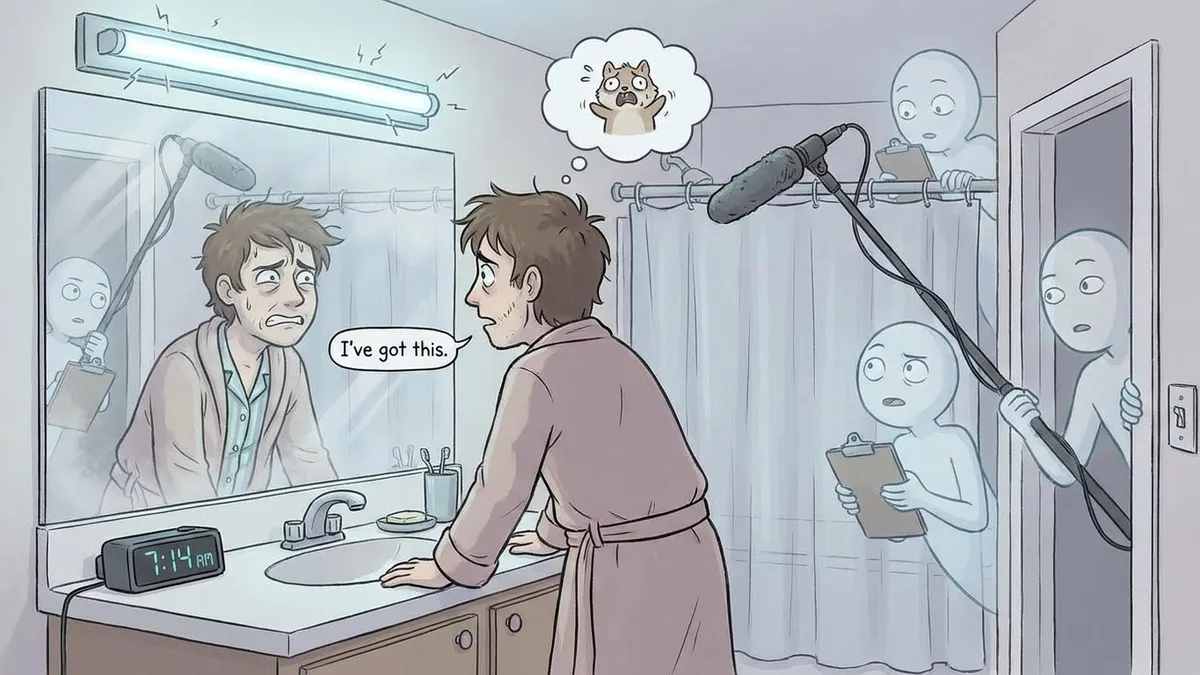
Here we observe the human in their natural habitat: a bathroom mirror at 7:14 AM.
Watch closely. The subject is engaging in the ancient ritual known as “Affirmations.” They stare into their own eyes—a challenging feat—and whisper, “You are enough. You are capable. You will not accidentally reply-all again.”
The conviction is remarkable. The delusion, even more so.
This is the study of confidence: a trait so poorly understood that humanity has spent $12 billion annually on self-help books, seminars, and LinkedIn courses—most of which could be summarized as “just do the thing, but louder.”
Chapter 1: A Rejection Letter from Your Own Psyche

Before we proceed, a document has been uncovered. It appears to be correspondence from the Department of Self-Worth.
Skip the jokes, just tell me what actually works
OFFICIAL NOTICE Department of Self-Worth Subdivision of Imposter Syndrome Affairs
Dear Applicant,
We regret to inform you that your application for Unshakeable Self-Belief has been denied.
After careful review, we have determined that:
- That thing you said in 7th-grade math class remains on your permanent record.
- You once waved back at someone who was waving at the person behind you.
- The email you sent in 2019 did, in fact, have a typo. Everyone noticed.
We will keep your resume on file. We will not contact you.
Sincerely, Your Brain Office Hours: 3 AM, Every Night, Without Fail
Here lies the problem. The confident don’t get these letters. Or rather, they do—they just don’t open them.
Skip the jokes, just tell me what actually works
Chapter 2: Observing Homo Confidentus in the Wild
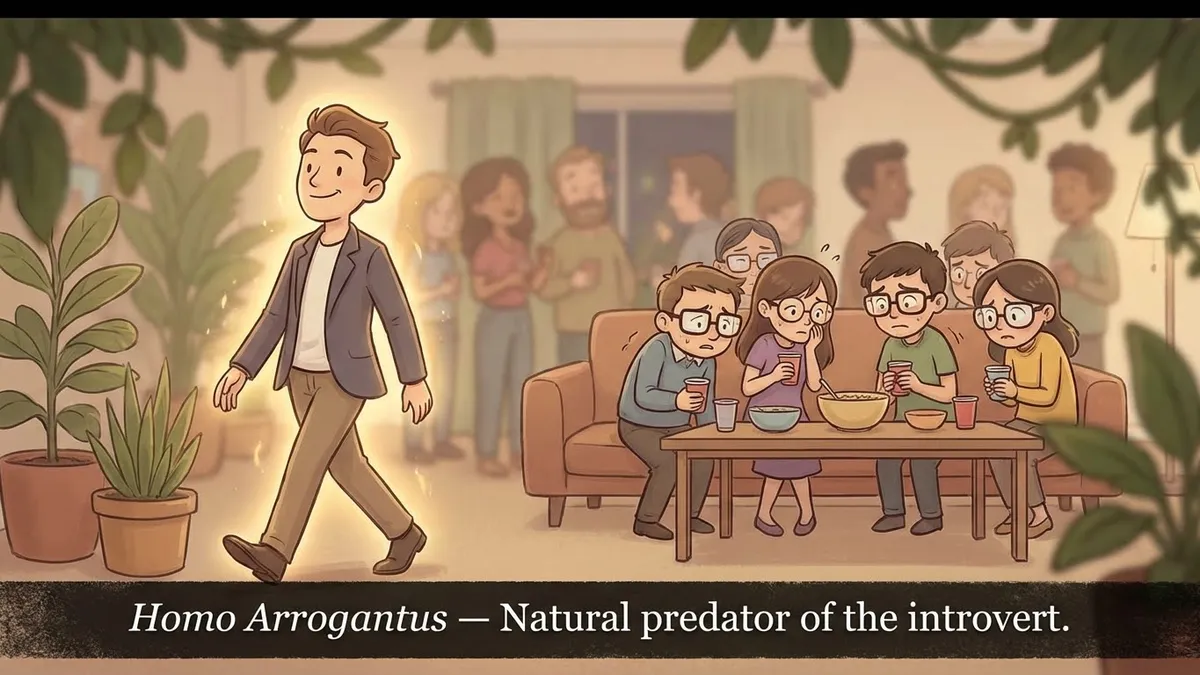
The Confident Person (homo arrogantus) enters the party.
Note the posture: shoulders back, chin level, occupying space as if they’ve paid rent on it. They do not check their phone upon entry. A terrifying display of dominance.
The rest of the herd—the Nervous Ones—cluster near the snack table, performing an elaborate mating dance of “looking busy with a drink.” They nod at strangers, hoping the nod conveys, I am approachable but also fine being alone, please do not test this balance.
Meanwhile, Homo Arrogantus simply… talks to people. Unprompted. Without an agenda. Scientists remain baffled.
Field Note: It is unclear whether the Confident Person experiences the same internal monologue as the Nervous One. Current hypothesis: they do, but the volume is set to “mute.”
Chapter 3: The Invoice
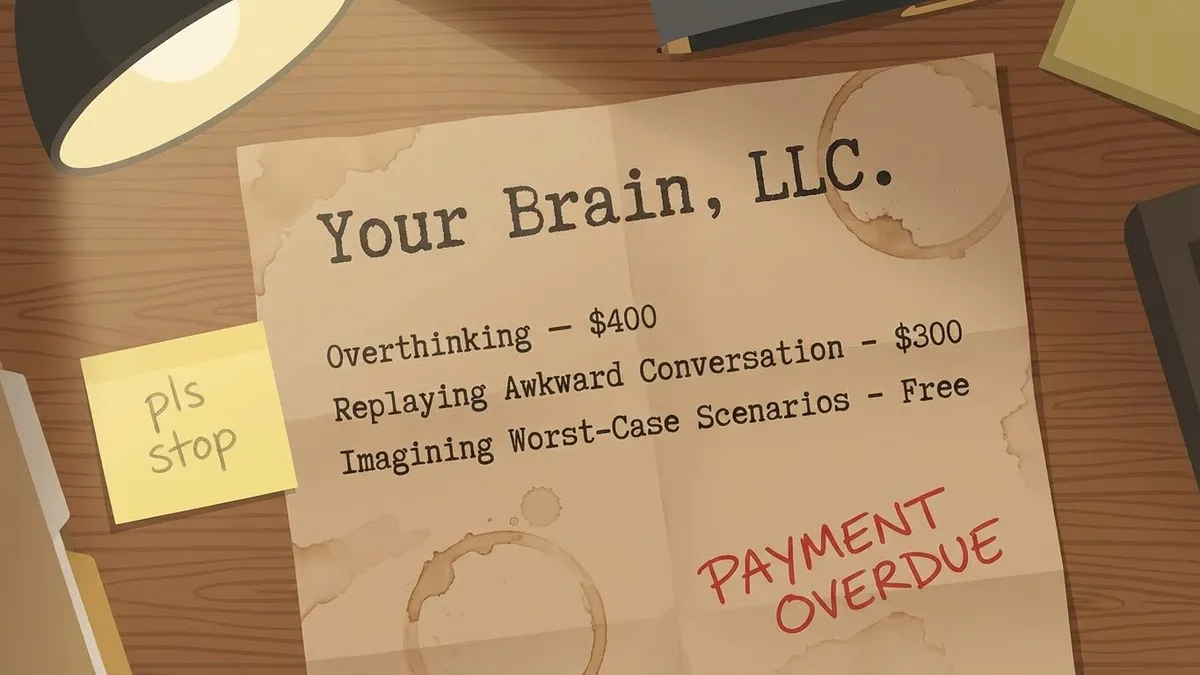
Speaking of internal monologues, another document has surfaced.
Skip the jokes, just tell me what actually works
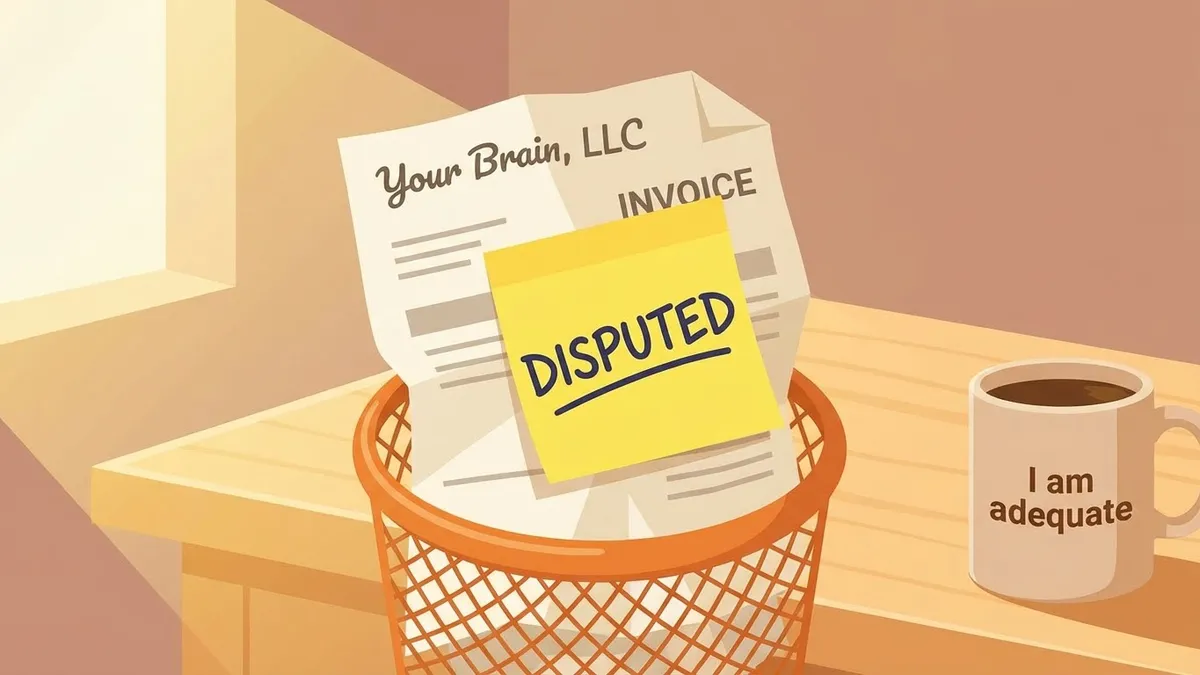
INVOICE From: Your Brain, LLC To: You Date: Every Day
| Service | Hours | Rate | Total |
|---|---|---|---|
| Overthinking | 4 | $100/hr | $400 |
| Replaying Awkward Conversation | 3 | $100/hr | $300 |
| Imagining Worst-Case Scenarios | ∞ | $0/hr | Free |
| Unsolicited Flashback (2009) | 0.5 | $200/hr | $100 |
Subtotal: $800 Discount (for being you): $0 Total Due: Your Peace of Mind
Payment is automatic. No opt-out available.
This is the tax we pay for self-awareness. The Confident are not exempt—they simply dispute the invoice.
Skip the jokes, just tell me what actually works
Chapter 4: What the Studies Say (Sort Of)
A 2024 study from the Institute of Things We Made Up found that:
- 94% of “confident” people have simply stopped caring what happens
- The remaining 6% are lying
- The most confident person in any room is statistically the least qualified to be there (Dunning-Kruger et al., Every Meeting Ever)
Dr. Imogen Faux, Professor of Posturing at the University of Unverified Claims, sums it up like this:
“True confidence is the ability to walk into a glass door and make it look like a decision. The rest of us apologise to the door.”
The research is clear: confidence is not the absence of doubt. It is the willingness to act before the doubt arrives. A form of strategic amnesia regarding your own limitations.
What Actually Works
Alright. The nature documentary ends here. Let’s talk about what genuinely helps.
The Boring Truth
-
Competence creates confidence. You don’t feel confident because you haven’t done the thing enough. The solution is reps, not affirmations. Do the thing badly. Do it again. Keep going until it’s boring.
-
The Spotlight Effect is a lie. No one is watching you as closely as you think. They’re too busy worrying about themselves. This is both depressing and liberating.
-
Physiology first. Stand up. Breathe. Unclench your jaw. Your body influences your mind more than you realize. It’s not magic—it’s biology.
-
Separate feelings from actions. You can feel nervous and still act confident. The goal isn’t to eliminate fear; it’s to move anyway.
-
Lower the stakes. Confidence isn’t one big leap. It’s a series of tiny bets where the downside is survivable. Ask a question in a meeting. Send the email. Floss one tooth.
The Feedback Loop
Do a small scary thing. Survive. Your brain goes, “Oh, we didn’t die?”
Do a slightly bigger scary thing. Survive again. Your brain starts to recalibrate.
Repeat until you’re giving a TED Talk—or at least ordering pizza on the phone without sweating.
This is the actual mechanism. Confidence isn’t built by thinking; it’s built by surviving. Every minor victory rewires your brain’s risk assessment. The loop compounds.
Alternatives That Sometimes Work Better
-
If affirmations feel ridiculous: Focus on evidence instead. List three times you didn’t die from embarrassment. You’re still here. The math checks out.
-
If “faking it” feels dishonest: Call it “practicing.” You’re not being fake—you’re rehearsing the person you’re becoming.
-
If big steps paralyze you: Make the bar comically low. Don’t “network at the party.” Just “say one sentence to one human.” Victory.
-
If confidence feels permanent for others and temporary for you: It’s temporary for everyone. They’re just better at reloading.
Recommended Reading
If you want to go deeper, these are genuinely useful:
- “The Confidence Gap” by Russ Harris – On acting despite fear, not waiting for it to leave.
The Confidence Gap

- “Presence” by Amy Cuddy – The science behind “fake it till you become it.”
Presence: Bringing Your Boldest Self to Your Biggest Challenges

- “Atomic Habits” by James Clear – Because confidence is built in small, repeated actions.
Atomic Habits: An Easy & Proven Way to Build Good Habits & Break Bad Ones

Disclosure: Links may be affiliate links. We’ll use the proceeds to fund more fake studies.
Closing Transmission
And so, the documentary concludes.
We leave our subject standing in front of the bathroom mirror once more. They have read the rejection letter. They have disputed the invoice. They have survived every awkward moment, every cringeworthy email, every presentation where their voice did that thing.
Confidence is not a trait you’re born with. It’s a skill you build—one survivable moment at a time. The internal monologue will continue. It always will. But the volume, perhaps, is a little lower today.
Don’t pay the invoice. Your brain works for you—not the other way around.