How to Stop Procrastinating (You're Doing It Right Now)

You’re procrastinating right now.
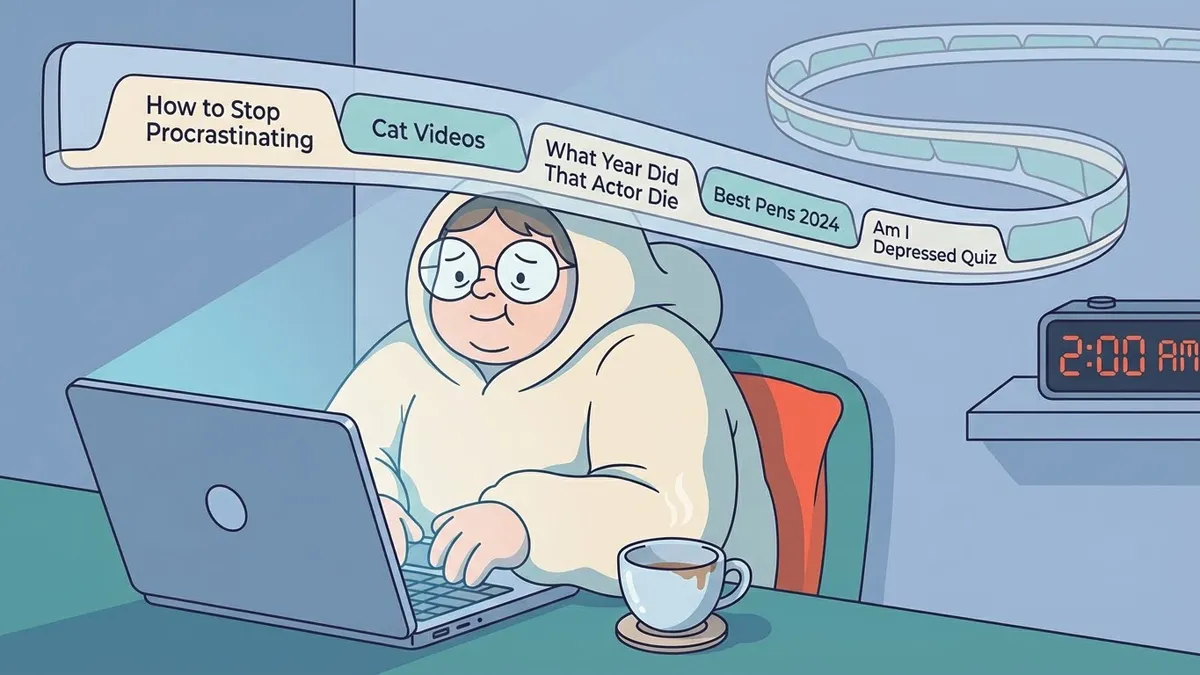
I’m not accusing you. I’m stating a fact. Somewhere, there is a Thing You Should Be Doing. It’s probably sitting in your inbox, or hovering at the edge of your consciousness like a guilt-coloured cloud. Instead of doing that thing, you chose to read an article about doing things.
We’re accomplices now. That’s fine. Let’s make this worth it.
”Starting Monday”
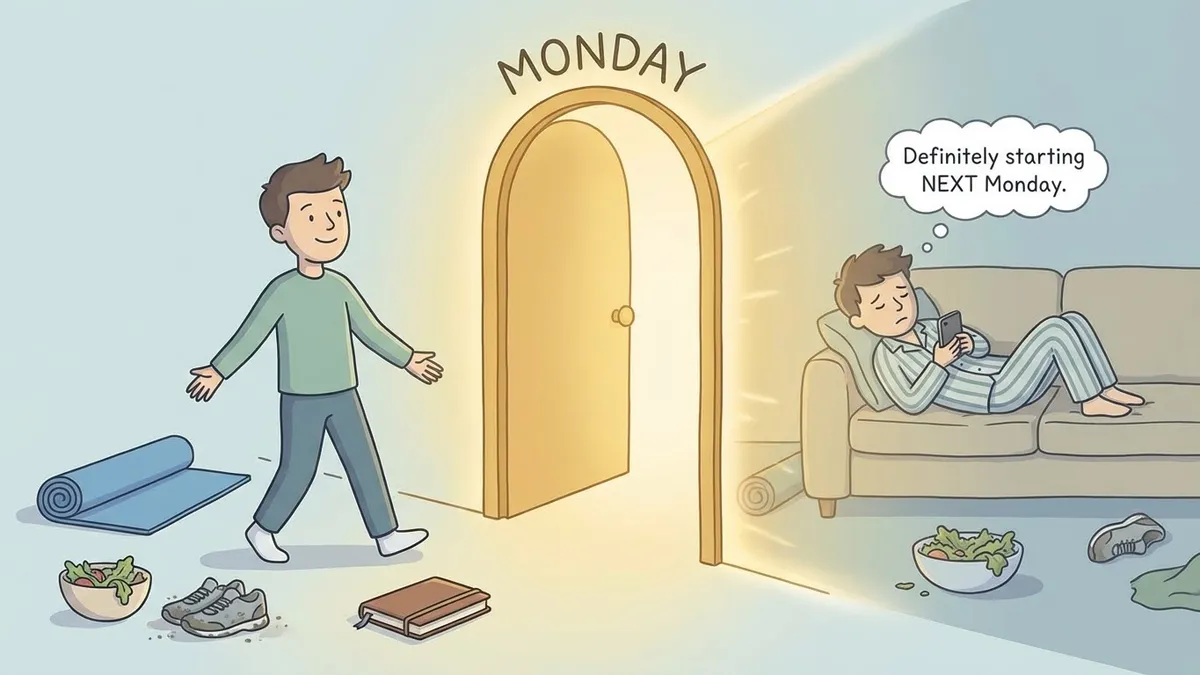
Monday is a magical portal to a dimension where you are better.
In the Monday Dimension, you wake up motivated. You eat well. You tackle your inbox with ruthless efficiency. The Monday You is essentially a different species — organised, disciplined, unstoppable.
It’s January 10th. How’s that going?
By Tuesday, you realise the portal was a lie. Monday was just… a day. Wednesday comes and goes. By Friday you’re back to “definitely starting next Monday.”
It’s the same logic as the New Year’s Resolution. January 1st: a fresh start! By January 10th: you’ve eaten pasta three times and the gym membership is a polite fiction you tell yourself.
The day isn’t the problem. The fantasy is. “Starting Monday” lets Present You feel productive without actually doing anything. You’ve decided to change. That feels like progress. It isn’t, but it feels like it.
Real talk: if you won’t start at 3:47pm on a random Thursday, you’re not going to start on Monday either. Mondays don’t have special powers. Neither does January. The best time to start was yesterday. The second best time is now, which you are also avoiding by reading this.
Skip the jokes, just tell me what actually works
The Efficiency Paradox
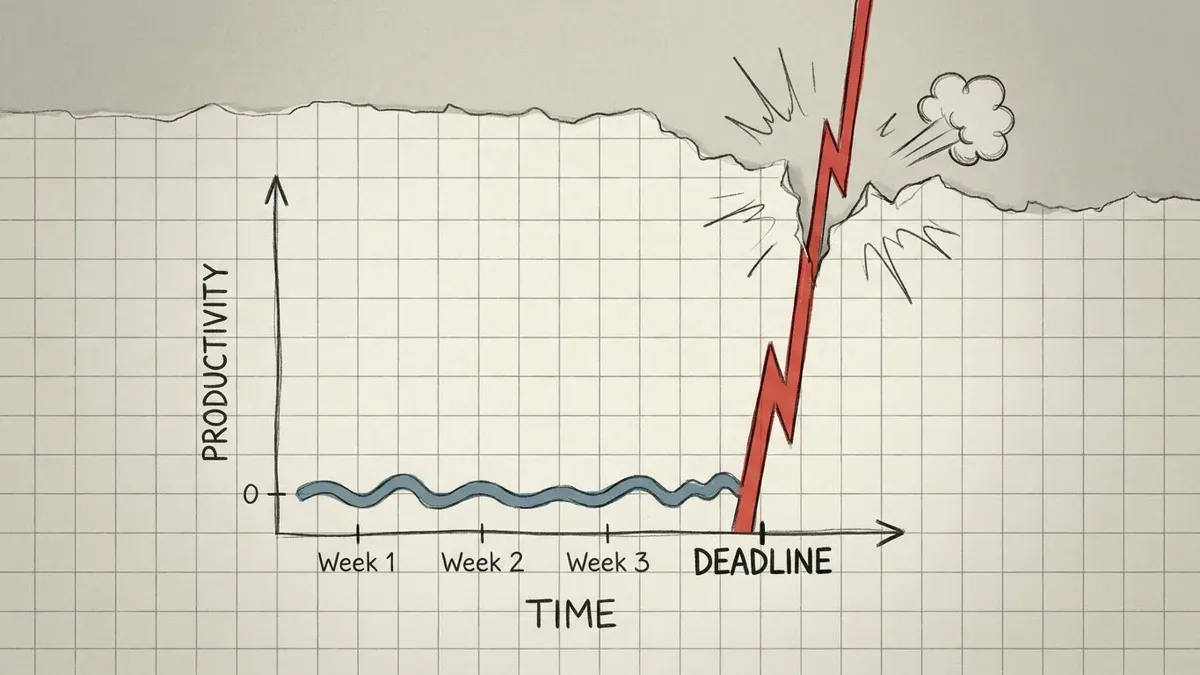
Procrastinators are often incredibly efficient. Just not when it would be useful.
Give a procrastinator three weeks to complete a task, and they will spend 20 days doing everything except that task. On day 21, they will complete it in four hours. Flawlessly. Under extreme duress. Powered entirely by panic and spite.
Where was this efficiency on Day 1? Or Day 10? The ability was there all along. It just required the psychic pressure of imminent disaster to activate.
It’s like owning a supercar but only driving it when the building is on fire.
The weird flex: you can make anything take forever when you don’t want to do it. A task that should take 40 minutes becomes a six-week epic of delay, anxiety and creative avoidance. But touch a deadline and suddenly you operate at inhuman speed, cutting corners you didn’t know existed, typing with a focus usually reserved for bomb defusal.
You aren’t lazy. You are terrifyingly capable, but only under specific, adrenaline-driven conditions that are actively bad for your health.
Is this a skill? Unclear. Is it sustainable? Definitely not. Will you keep doing it anyway? Almost certainly.
The Real Reason You’re Not Doing It
Okay, jokes aside.
Procrastination isn’t laziness. It’s almost never laziness. Lazy people don’t feel bad about not working—they’ve made peace with it. Procrastinators feel terrible. That’s the tell.
Procrastination is usually about emotion, not time management:
- The task feels too big, so you feel overwhelmed.
- You’re afraid you’ll do it badly, so you avoid starting.
- It’s boring, and your brain would rather do literally anything else.
- There’s no immediate consequence, so “future you” gets to deal with it.
- You don’t actually want to do this thing at all (sometimes that’s the answer).
The fancy term is “mood repair.” The task makes you feel bad. So you do something that makes you feel good instead (phone, internet, convincing yourself the fridge has changed since the last time you checked).
Bad news: the task is still there. Now it’s worse, because it’s still there AND you feel guilty.
Knowing this doesn’t magically fix it. But it does reframe the question. It’s not “why am I so lazy?” It’s “what am I actually avoiding feeling?”
What Actually Works
Here is the boring, practical advice. Skip if you want. (Add another task to your “eventually” list.)
1. The Two-Minute Rule
If it takes less than two minutes, do it now. Not “later.” Not “after this article.” Now.
You’ve seen this advice. You’ve ignored it. This time, actually try it for one day.
The maths: you spend more mental energy remembering small tasks than doing them. Get them out of your brain.
2. Make Starting Stupid Easy
Don’t plan to “write the report.” Plan to “open the document and type one sentence.”
Don’t plan to “go to the gym.” Plan to “put on gym shoes.”
Brains resist big commitments. Trick yours with absurdly small ones. Momentum is real.
3. Body Doubling
That’s why coworking spaces exist. That’s why people pay money to sit near strangers.
Humans are weird: we struggle to work alone but will absolutely work if someone else is near us, doing their own work, not even paying attention.
You can do this virtually. Video call a friend. Both work silently. It works. It’s strange, but it works.
4. Time Boxing (With An End)
Work for 25 minutes. Stop. Not “work until it’s done”—that’s an open-ended threat. “Work for 25 minutes” has an end. Your brain likes ends.
The task might not be finished. That’s fine. You did 25 minutes. Tomorrow you’ll do another 25. It adds up.
5. Address the Real Thing
If you’ve been avoiding something for months, it might not be about productivity. Ask yourself:
- Do I actually have to do this?
- What am I afraid of?
- What’s the worst that happens if I do it badly?
- What’s the worst that happens if I don’t do it at all?
Sometimes the answer is “actually I don’t have to do this and I should just delete it from my list.” That’s valid. That’s a decision. It counts.
Alternatives That Sometimes Work Better
- If you work better under pressure: Set artificial deadlines. Tell someone you’ll send it to them by 3pm. Now there’s a consequence.
- If mornings don’t work: Stop forcing “first thing.” Some people get their best work done at 10pm. That’s fine.
- If apps don’t help: Paper lists still exist. Sometimes low-tech is less fiddly.
- If nothing works: This might be about something bigger. Persistent avoidance can be a symptom, not just a habit. Worth exploring.
Products That Might Help (or Become Part of Your Avoidance Ritual)
I have to tell you these are affiliate links. I might earn a commission if you buy them. But honestly, buying stuff won’t fix your procrastination. Only you can do that. But here is some stuff anyway.
Eat the Frog First
The whole book is about doing the worst task first thing. Yes, that one. The one you’re avoiding right now. Named after a Mark Twain quote about how if you eat a live frog first thing in the morning, nothing worse will happen to you the rest of the day.
Eat That Frog!, Fourth Edition: 21 Great Ways to Stop Procrastinating and Get More Done in Less Time

Remove the Temptation Entirely
Your phone is the portal to infinite distraction. This box locks it away for however long you set. No willpower required — the box literally won’t open. Extreme? Maybe. Effective? Absolutely.
Mindsight Timed Lock Box

Learn to Actually Focus
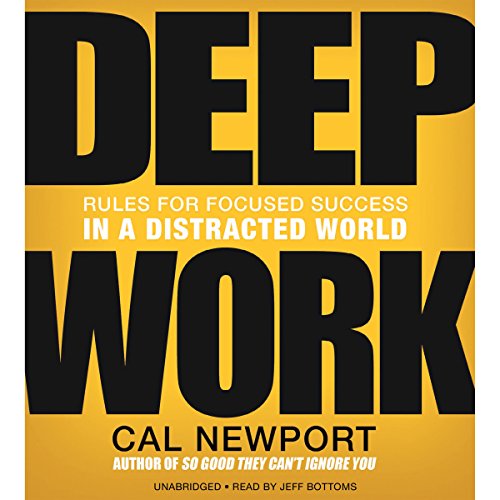
Cal Newport argues that the ability to do deep, uninterrupted work is becoming rare and valuable. This book is about building that skill. Fair warning: you might feel called out.
Deep Work: Rules for Focused Success in a Distracted World
A Closing Confession
I wrote this article instead of doing something else.
I was supposed to be organising my notes for a different project. It’s been on my list for two weeks. Every day I look at it. Every day I find something more urgent, more interesting, more anything.
Today I found “writing about procrastination.” Very meta. Very unproductive.
But here’s the thing: I finished this. And finishing things—even the wrong things—has a momentum to it. Now the machine is running. Now other tasks seem slightly less impossible.
Maybe that’s the secret. Don’t wait for the “right” task. Just start anything. Build the momentum. Redirect it later.
Or don’t. I’m not your boss.
But you should probably go do that thing now.
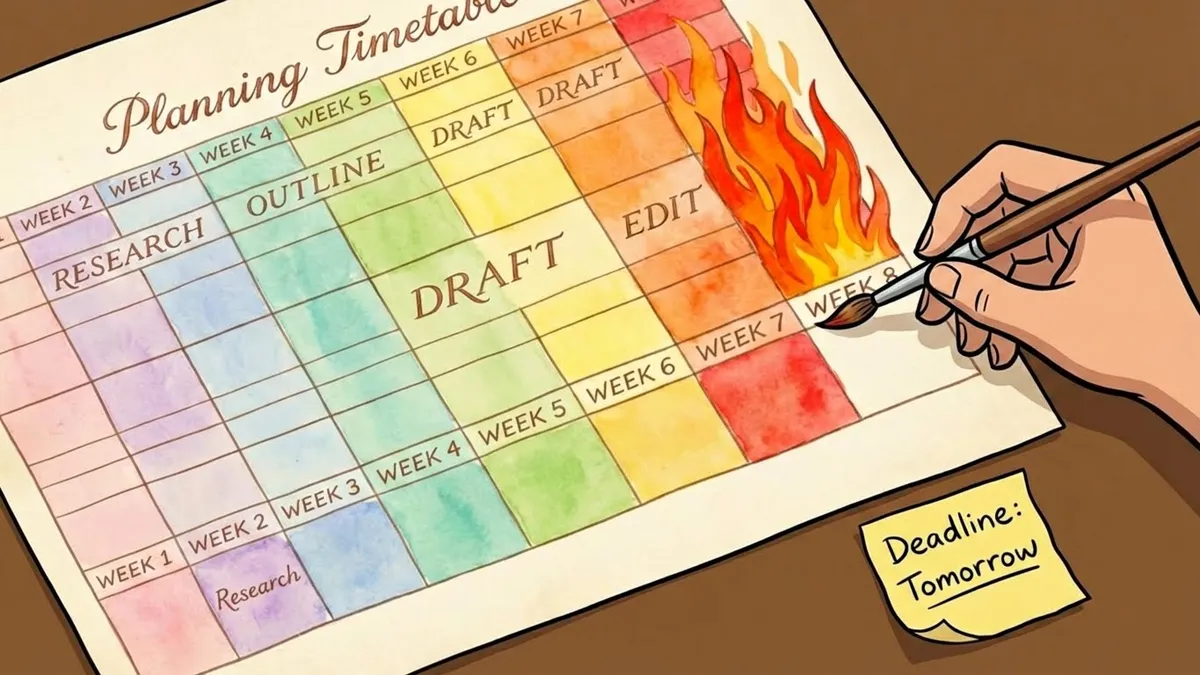
I’m off to create a revision timetable for the next article. I’ve got a system. It involves watercolours and it’s going to be a minor work of art.