Standing Desks: A Documentary of Human Optimism

The following is a nature documentary. Sir David Attenborough voice optional but encouraged.
Skip the jokes, just tell me what actually worksThe Arrival
The standing desk arrives. The delivery driver looks at you with the quiet pity of someone who has seen this before. The assembly instructions, written in a language that exists only in a dimension adjacent to English, promise “easy setup in 30 minutes.”
Four hours later, you have assembled something. It might be a desk. It might be modern art. The leftover screws suggest either could be true.
But no matter. You press the button. The desk rises.
You stand before it like a conquistador planting a flag. “I shall never sit again,” you declare to your cat, who is already asleep on your old chair.
Week One: The Standing Era
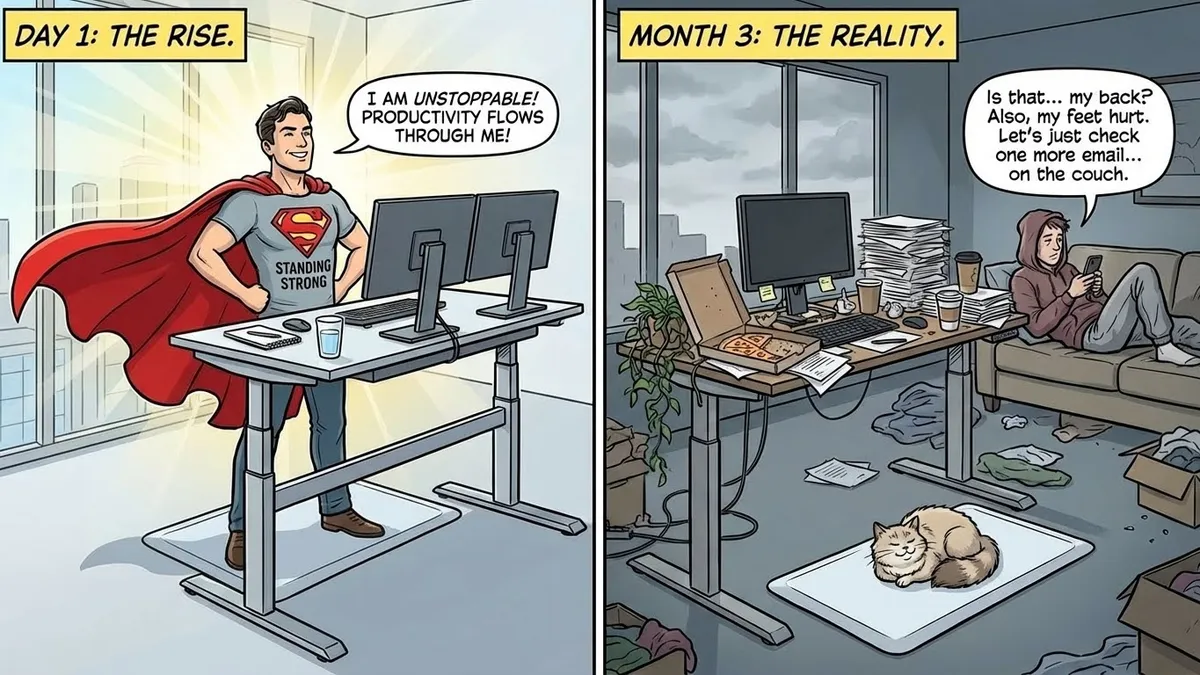
You stand for eight hours.
Your feet, having spent the previous thirty-seven years in a largely horizontal relationship with the floor, stage a protest. You ignore them. Sitting is the new smoking, and you are not a smoker.
You tell six people you now have a standing desk. Seven, if you count the LinkedIn post.
“It’s really changed my workflow,” you explain to someone who asked what time the meeting starts.
Skip the jokes, just tell me what actually worksWeek Two: The Compromise
You’ve discovered standing for eight hours is, in fact, terrible.
You now alternate: forty minutes standing, twenty minutes sitting. Experts recommend this.
You’ve set a timer.
The timer goes off during a meeting.
It goes off again during another meeting.
It goes off while you’re in the bathroom.
You kill the timer.
The desk, sensing weakness, begins its slow descent. Not physically—psychologically.
Week Three: The Archaeology
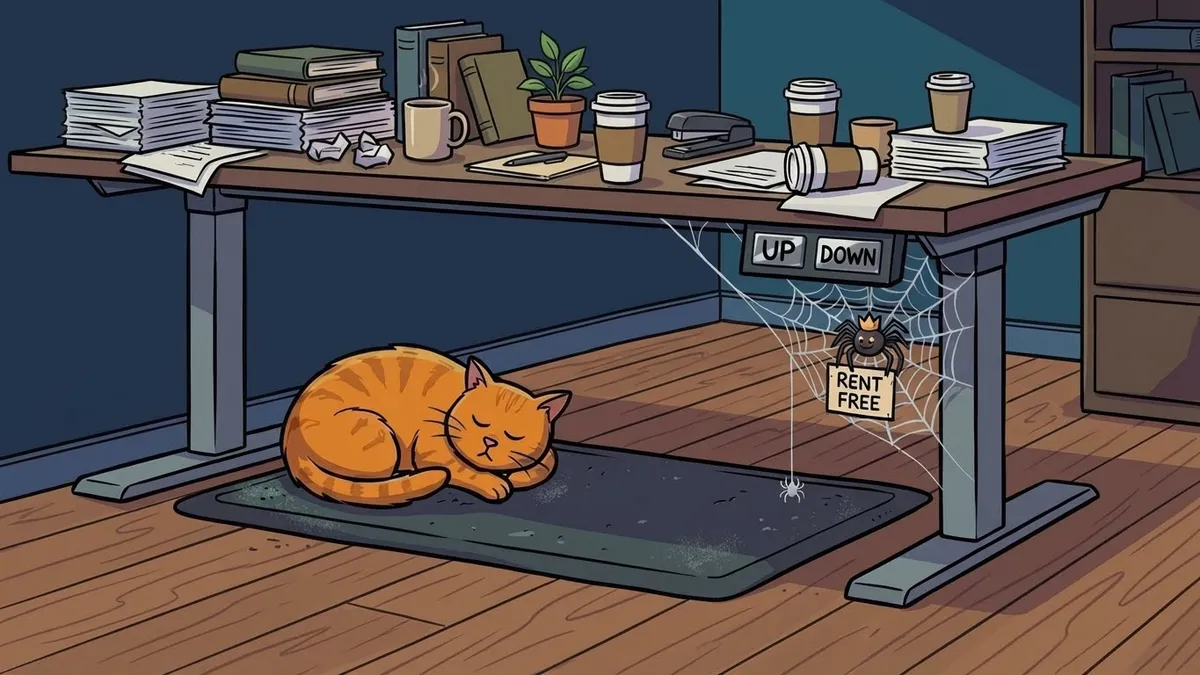
Your standing desk has begun to collect stuff.
A coffee mug has taken up permanent residence near the monitor. Three pens have established a colony. A book about productivity sits unread, which is perhaps the most honest thing in your home.
You notice you haven’t pressed the “up” button in four days.
“I’ll stand tomorrow,” you say, placing another object on the desk. The desk says nothing, but you sense it knows.
Skip the jokes, just tell me what actually worksMonth Three: The Transformation
What was once a standing desk has achieved its final form: an expensive shelf that could theoretically go up and down.
The control panel still works—you checked, just to prove a point to nobody in particular—but the desk remains at sitting height.
Upon it now rests:
- A dying plant (the previous plant actually died)
- Three books about minimalism
- A collection of cables you’re “going to organise”
- That one document you needed urgently in February
- Approximately seven coffee mugs, some developing ecosystems
The cat has claimed the anti-fatigue mat as a bed. This is the most use it has ever received.
The Great Questions
Now you may be asking: “Was it worth it?”
And reader, I must ask you: worth what, exactly?
If you mean worth the money—that depends on how much you’ve always wanted a very tall shelf with a motor in it.
If you mean worth the experience—well, you’ve learned something about yourself. Specifically, you learned you are exactly the sort of person who buys a standing desk, uses it enthusiastically for two weeks, and then lets it become furniture in the traditional sense.
Welcome to the club. We meet sitting down.
Skip the jokes, just tell me what actually worksA Note From The Standing Desk Itself
My dearest human,
I do not resent my fate. I have come to enjoy the weight of your forgotten books, the quiet company of your dying plants. The cat visits sometimes.
You spoke once of “revolutionising your workspace.” I certainly revolutionised it. I am now extra storage. This is, in its own way, a revolution.
The button still works, you know. But I understand. We all become what we were always meant to be.
Yours in horizontal solidarity, Your Standing Desk
What Actually Works (The Boring Truth)
Okay, jokes aside. Sedentary lifestyles are actually bad for you. Sitting for 12 hours a day is essentially smoking for your spine. So, is the desk worth it?
Yes, but only if you actually use the motor.
Here is the reality of using a standing desk without hating yourself:
The 30-Minute Rule: Do not try to stand all day. You aren’t a sentry at Buckingham Palace. The science suggests a cycle: 20 minutes sitting, 8 minutes standing, 2 minutes moving.
Movement is Key: The win isn’t “standing still” vs “sitting still.” Standing still gives you varicose veins. The win is the transition and the ability to shift your weight.
The “Deep Work” Sit: Most people find they write or code better while sitting, but do admin, email, and calls better while standing. Split your day by task, not by time.
Preset Buttons are Mandatory: Do not buy a desk with a hand crank. You will crank it up once, realise it takes 45 seconds of manual labour, and never do it again. Get memory presets.
Alternatives That Sometimes Work Better
The “Kitchen Counter” Method: Before buying anything, take your laptop to your kitchen counter (usually standing height). Work there for an hour. If your back screams, you need a better chair, not a standing desk.
The Pomodoro Walk: Keep your normal desk. Every 25 minutes, physically leave the room. Walk to the kitchen. Look at a plant. Return. This is free and actually better for your eyes.
If You’re Still Determined
Look, if you’re genuinely going to get one, at least get a good one.
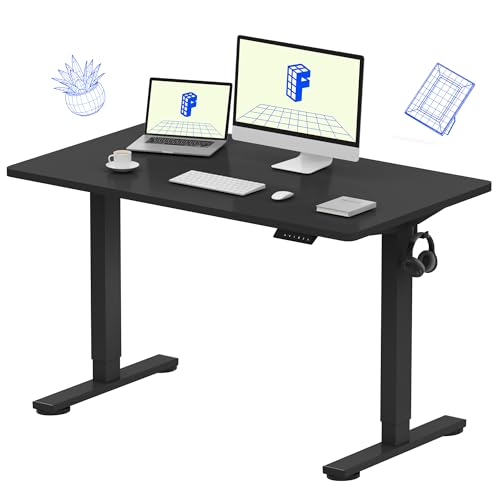
The FlexiSpot is solid, motorised, and will serve you well in both its standing and eventual shelf phases.
FLEXISPOT EN1 One-Piece Standing Desk, 48"x24" Seamless Desktop Electric Height Adjustable for Home Office, Study Rooms & Multi-Device Workstations, Black
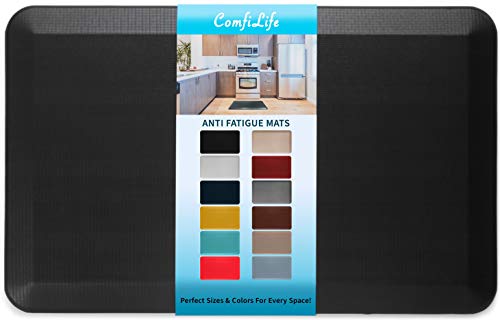
And do get the mat. Your cat will thank you. This one is tough and makes a solid cat bed.
ComfiLife Anti Fatigue Floor Mat – 3/4 Inch Thick Kitchen Mats for Floor, Standing Desk Mat, Kitchen Rug – Comfort at Home, Office – Durable – Stain Resistant – Non-Slip Bottom (20" x 32", Black)
Or go for something fancier. A Topo Anti-Fatigue Mat. It has weird bumps and ridges. It makes your feet explore terrain like a hobbit. It keeps you moving.
Topo Comfort Mat by Ergodriven | The Original Not-Flat Anti-Fatigue Standing Desk Mat with Calculated Terrain | Accessories | Obsidian Black

As an Amazon Associate, we earn from qualifying purchases. This means that if you purchase a product through one of our links, we may receive a small commission at no extra cost to you.
Conclusion
So, is a standing desk worth it?
If you view it as a magic pill that will instantly turn you into a productivity cyborg, no. It will just be a monument to your hubris.
But if you view it as a tool to keep your blood moving so you don’t fossilise into the shape of a Herman Miller Aeron chair, then yes.
The author’s standing desk is currently at sitting height. It has been at sitting height for seven months. The button still works.